
Downtown Miami's Hospitality Market See a $300M Acquisition of the InterContinental Miami
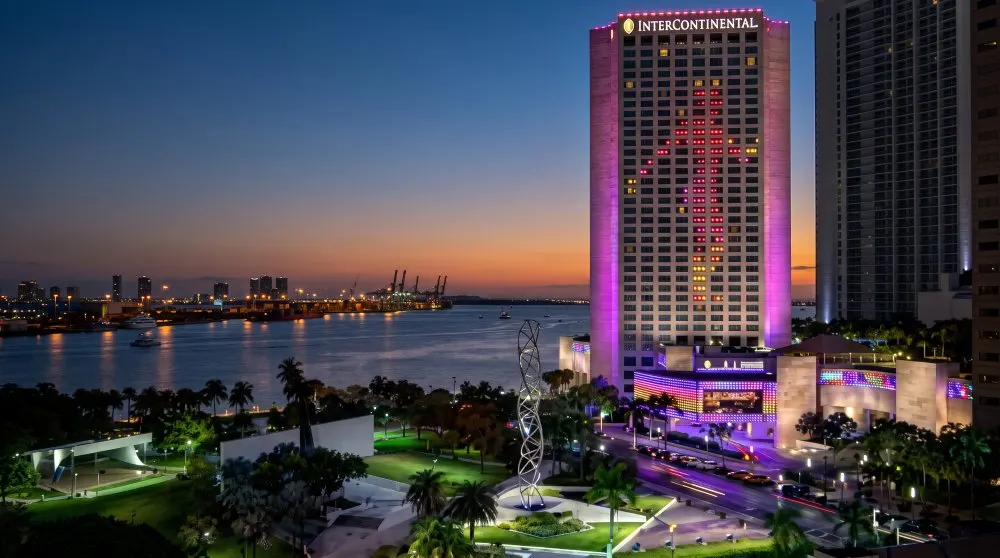
The reported $300 million acquisition of the InterContinental Miami reflects a broader investment strategy in acquiring established hospitality assets in locations that are increasingly difficult to replicate.
Miami's real estate story has long been defined by its skyline. Luxury condominium towers, ambitious mixed use developments and internationally recognized residential brands have helped transform the city into one of the country's most closely watched property markets. Yet another segment of the market is attracting renewed attention from sophisticated investors: established hospitality real estate.
The reported acquisition of the InterContinental Miami by Gencom and White Bridge Capital for approximately $300 million offers a compelling example of this shift. The transaction underscores the continued appeal of strategically located hotel properties and highlights how investors are approaching opportunities beyond traditional ground-up development.
Located at 100 Chopin Plaza in Downtown Miami, overlooking Biscayne Bay, the 652 room hotel occupies one of the city's most recognizable waterfront locations. Its proximity to Brickell, Bayfront Park, PortMiami and the central business district gives it access to several of Miami's most important demand drivers, including corporate travel, tourism, conventions and international visitors.
For investors, the attraction extends beyond the property itself. It is an opportunity to acquire an established hospitality operation in a location where comparable real estate would be difficult and expensive to replicate.
The Value of an Established Hospitality Asset
The distinction between developing a new hotel and acquiring an existing one is significant.
Ground up development involves navigating land acquisition, entitlements, construction costs, financing, permitting and the uncertainty of bringing a new property to market. An established hotel, by comparison, offers an existing operating platform, an identifiable customer base and infrastructure that can generate revenue immediately.
The InterContinental Miami also recently completed a comprehensive renovation, updating guest rooms, public spaces, technology and other amenities. Its extensive meeting and event facilities, restaurants, rooftop pool and established international brand recognition further distinguish it within the Downtown Miami hospitality landscape.
For Gencom, the acquisition represents an opportunity to build on an existing foundation rather than create one from scratch.
The reported purchase price of approximately $300 million translates to roughly $460,000 per room. While the transaction's ultimate investment value will depend on operating performance, expenses and future market conditions, the pricing illustrates the substantial capital investors are willing to commit to well positioned hospitality properties.
Institutional Capital Finds Opportunity in Miami
The partnership between Gencom and White Bridge Capital is also noteworthy.
Gencom has established itself as an active investor and developer in luxury hospitality, with a portfolio that includes prominent hotel and resort properties. White Bridge Capital brings an investment platform connected to international family-office capital.
Together, the firms represent a broader trend in which experienced hospitality operators partner with private investment groups to acquire strategically important real estate.
This is particularly relevant in Miami, where international capital, private wealth and institutional investment have become increasingly influential forces.
The acquisition also reflects confidence in the city's long term appeal as a global destination for business and leisure. Miami's hospitality economy benefits from multiple sources of demand, including international tourism, cruise passengers, corporate activity, major events and the continued expansion of the surrounding financial and professional services sectors.
While these factors do not eliminate the cyclical risks associated with hotel ownership, they provide a diversified foundation for properties positioned in established locations.
A Broader Hospitality Investment Strategy
The transaction is part of a larger pattern in Gencom's South Florida activity.
The firm has maintained a significant presence in the region through investments in properties such as The Ritz-Carlton Key Biscayne and The Ritz-Carlton Coconut Grove. Its involvement in the proposed Miami Riverbridge development further demonstrates an interest in hospitality led projects that combine hotels, residential uses and complementary amenities.
This strategy suggests that investors are looking beyond individual hotel transactions and considering the broader potential of hospitality as a real estate investment platform.
Hotels are particularly interesting because their financial performance is influenced by both the underlying real estate and the quality of the operating business. Revenue management, occupancy, average daily rates, food and beverage operations, meetings and events, and guest experience all contribute to the property's financial results.
In this environment, ownership and operational expertise can become important sources of competitive advantage.
Miami's Next Hospitality Chapter
The InterContinental acquisition also raises a broader question about the future of Downtown Miami.
As Brickell continues to strengthen its position as a financial center and Downtown attracts additional residential, commercial and cultural investment, hospitality properties are becoming an increasingly important part of the district's economic infrastructure.
The demand for quality accommodations is tied not only to tourism but also to the city's expanding business community, international investment activity and growing calendar of events.
For established properties, this creates opportunities to benefit from the evolution of the surrounding neighborhood.
However, the investment thesis is not without challenges. Hotel ownership remains sensitive to operating expenses, labor costs, insurance, competition and economic cycles. The ability to sustain occupancy, maintain pricing power and generate attractive operating margins will ultimately determine whether the acquisition delivers its anticipated value.
The Appeal of Irreplaceable Locations
Perhaps the most important takeaway from this transaction is the growing recognition that real estate value is not determined exclusively by new construction or architectural ambition.
In certain markets, the most attractive opportunities may already exist.
A waterfront location in the heart of Downtown Miami, supported by an established hotel operation and significant infrastructure, represents a combination that would be difficult to reproduce today.
As South Florida continues to attract capital, the distinction between creating new real estate and acquiring strategically positioned existing assets will become increasingly important.
The InterContinental Miami transaction is a reminder that some of the most compelling investment opportunities are not necessarily found in the next tower rising above the skyline, but in the established properties that have already secured their place within it.
For Miami's hospitality market, that may be one of the most important investment stories of the next decade.
Looking for your next home?
Search luxury condos, waterfront homes and rentals across South Florida.
More news
- Colette Residences Brings a Boutique Feel to Luxury Living on Brickell Avenue · November 24, 2026
- New York Money Keeps Flowing Into Miami with a $345 Million Loan · November 23, 2026
- A Historic Ocean Drive Hotel Could Become Miami Beach's Next Luxury Condominium · November 21, 2026