
ORA by Casa Tua and the Evolution of Miami's Luxury Residential Market

Miami's luxury residential market has entered a new phase of development, one in which the value of a property is increasingly measured by more than its location, architecture or views. As international capital continues to find its way into South Florida, developers are exploring a different proposition for residences to offer the features of luxury hotels, private clubs and established hospitality brands. The result is a changing definition of what it means to live well in one of the country's most closely watched real estate markets.
The proposed ORA by Casa Tua development in Brickell offers a revealing example of this shift. The project brings together Fortune International Group, international investment partner One United Properties and Casa Tua, the hospitality brand known for its restaurants and private club experience. The premise is straightforward but ambitious to create a residential environment in which hospitality is not an amenity added to the building, but an integral part of its identity.
That distinction matters. For decades, luxury condominium development in Miami was largely defined by physical attributes such as waterfront locations, expansive floor plans, architectural statements and increasingly elaborate amenity collections. Those features remain important, but they are no longer sufficient to distinguish every new project entering the market. As the supply of luxury residences expands, developers face a more complicated challenge in giving buyers a compelling reason to choose one building over another.
Branded residences have emerged as one answer. By associating a residential project with an established hospitality or lifestyle identity, developers seek to offer something that extends beyond the ownership of real estate. Restaurants, private clubs, wellness facilities, personalized services and professionally managed rental programs can create a more integrated residential experience. The brand becomes part of the proposition, providing a recognizable identity and, potentially, a stronger connection with buyers who value service and convenience as much as square footage.
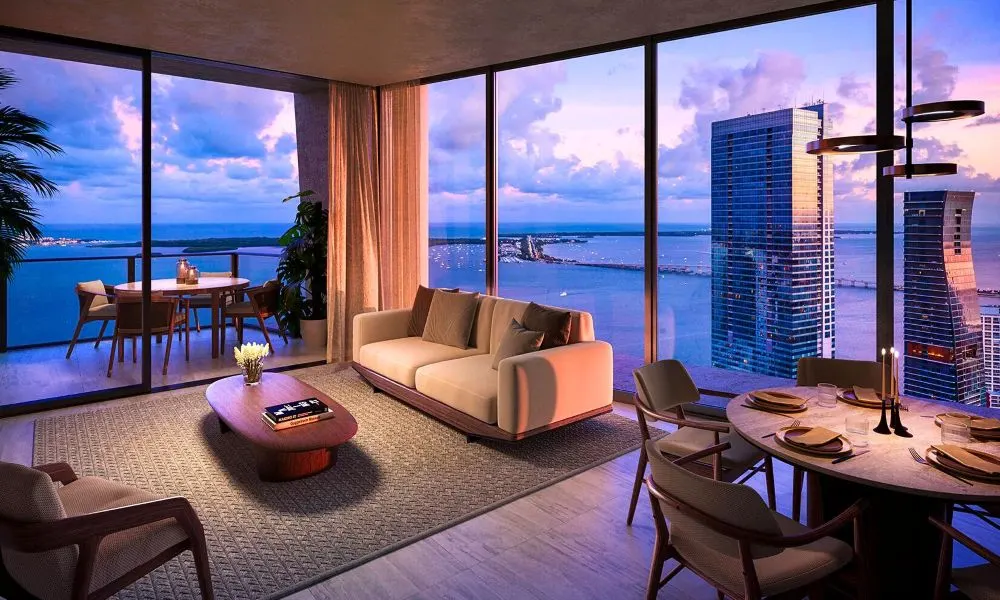
ORA by Casa Tua takes this concept into the heart of Brickell. The planned 77 story tower, with approximately 540 residences, is designed to incorporate multiple dining concepts, a private members' club, wellness amenities and shared spaces intended to encourage interaction. The Miami project's hospitality components are central to the development's positioning, reflecting a broader movement toward residential buildings that operate more like lifestyle destinations.
Located at 1210 Brickell Avenue, the building's international investment component is also noteworthy. One United Properties' participation introduces another European capital source into a Miami market that has long attracted investors from Latin America and elsewhere. Such investment reflects the city's expanding international profile, although the ultimate measure of confidence will be the project's ability to secure buyers, maintain a financial structure and deliver on development ambitions.
Brickell provides a particularly interesting setting for this evolution. Once identified primarily with banking, finance and commercial office towers, the neighborhood has steadily developed into a residential and hospitality destination. The dynamic neighborhood transformation reflects a larger change in Miami itself, as the city increasingly competes not only as a place to invest in property but also as a place to establish a lifestyle.
Still, the growing appeal of branded residences raises important questions. Does an established hospitality name translate into lasting property value? Can the quality of the experience be maintained long after the initial excitement surrounding a development fades? Will buyers continue to pay a premium for services and amenities that may also carry higher operating costs?
These are not merely marketing questions. They go to the economics of the branded residential model. A recognizable name can generate attention and help establish a project's identity, but long term value ultimately depends on execution, management, financial discipline and the quality of the residential experience.
For Miami, the significance of ORA by Casa Tua may therefore extend beyond the arrival of another ambitious tower on the Brickell skyline. It reflects a market increasingly shaped by the convergence of property, hospitality and international investment. The next generation of luxury residences will compete not simply on where people live, but also on how they want to live.
In that sense, the evolution of Miami's luxury residential market is becoming less about building higher and more about offering something that cannot be measured in floors or square feet alone.
Looking for your next home?
Search luxury condos, waterfront homes and rentals across South Florida.
More news
- Colette Residences Brings a Boutique Feel to Luxury Living on Brickell Avenue · November 24, 2026
- New York Money Keeps Flowing Into Miami with a $345 Million Loan · November 23, 2026
- A Historic Ocean Drive Hotel Could Become Miami Beach's Next Luxury Condominium · November 21, 2026