
Miami's Luxury Evolution and an $817M Construction Loan for Faena Residences
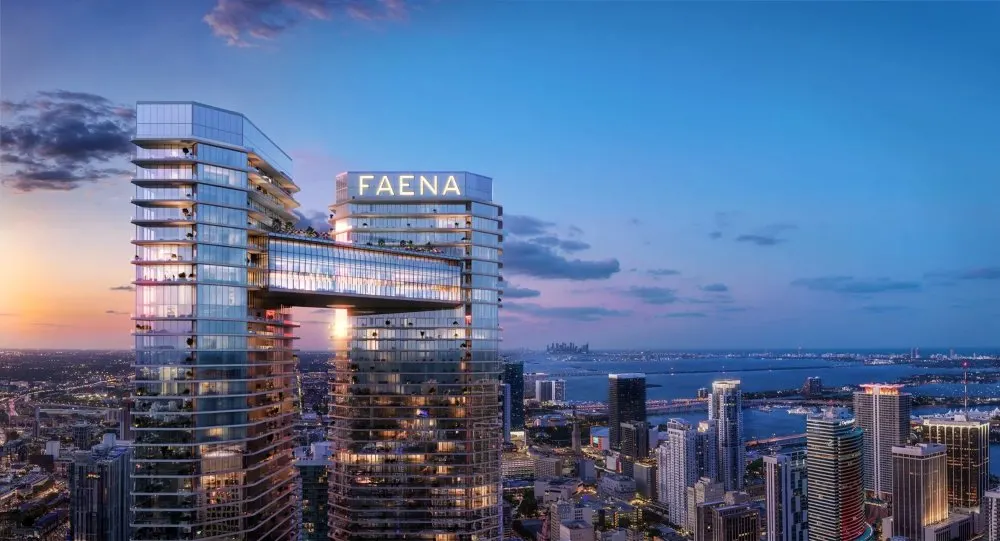
Miami's transformation into an international center of wealth, business and luxury living is increasingly visible in its skyline. But perhaps the clearest indication of how far the market has evolved is not found in the architecture alone. It can be found in the capital now flowing into the city.
The latest example is Faena Residences Miami, a planned two-tower condominium development along the Miami River that has secured an $817 million construction loan from Tyko Capital. Announced in October 2026, the financing represents the largest construction loan recorded in Florida, surpassing a $772 million loan previously secured for two office towers in West Palm Beach.
The transaction is more than a milestone for the developers. It offers a window into the confidence institutional lenders continue to place in Miami's upper tier of residential real estate, even as the broader housing market faces a more complicated environment.
A Landmark Development Takes Shape
Developed by Fortune International Group and KAR Properties, Faena Residences is planned for 24 Southwest Fourth Street, across the Miami River from Brickell City Centre. The project calls for two 68 story towers containing a combined 434 residences, designed by Rafael Viñoly Architects.
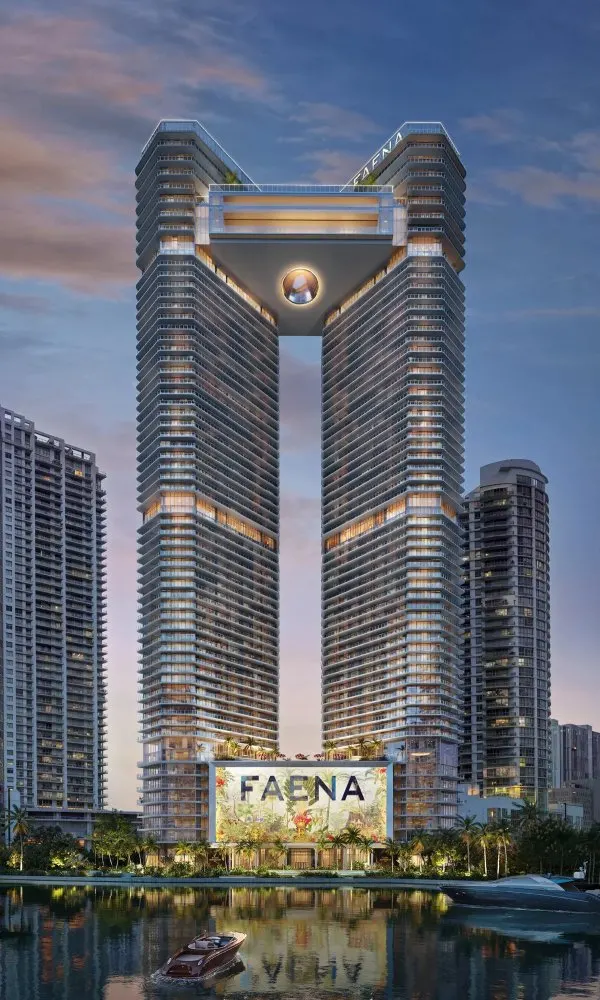
The towers will be connected by a three story skybridge incorporating Faena Rose, an approximately 45,000 square foot cultural and lifestyle center. Planned amenities include dining, wellness, fitness, entertainment and private event spaces.
The development seeks to extend the Faena identity beyond Faena House, its established Miami Beach presence, bringing its distinctive combination of hospitality, art and residential living to the mainland.
Its location is equally significant. Positioned between Downtown Miami and Brickell, the property occupies a stretch of the Miami River that has increasingly attracted attention from developers looking to capitalize on the city's evolving waterfront.
Following the Capital
The scale of the financing raises an important question: What makes a development of this magnitude attractive to lenders?
In this case, the answer appears to involve a combination of location, sponsorship, branding and demonstrated buyer demand.
According to the developers, Faena Residences has generated more than $500 million in presales. The reported transactions include a $30 million penthouse purchase, underscoring the level of spending the project is seeking to attract.

Tyko Capital, backed by Elliott Investment Management, has emerged as a significant source of real estate financing in South Florida. The firm has participated in several high profile transactions, including financing associated with 830 Brickell.
The Faena loan was arranged by Walker & Dunlop.
The financing also illustrates the growing role of private credit in large scale real estate development. As lenders evaluate risk and developers seek substantial amounts of capital, private investment platforms have become increasingly important participants in the financing landscape.
The loan's full financial terms have not been publicly disclosed, making it difficult to assess its precise risk profile. Nevertheless, its size demonstrates the availability of substantial capital for projects that lenders consider sufficiently differentiated and supported by demand.
Miami's Luxury Market Is Becoming More Selective
The broader context is important.
Miami's residential market has undergone a remarkable transformation over the past decade. The pandemic accelerated migration, attracted new wealth and reinforced the city's appeal as a destination for domestic and international buyers.
That momentum, however, has evolved.
The pace of migration to Florida has slowed from its pandemic era peak. According to Census Bureau figures cited by the Financial Times, the average number of people moving to Florida each day declined from approximately 1,640 in 2022 to 551 in 2025.
Yet, the luxury segment continues to demonstrate considerable activity.
Miami-Dade County recorded 24 single family home and condominium transactions of at least $30 million in the year through September 2026, compared with 21 during the preceding 12 month period, according to figures cited by the Miami Association of Realtors.
These figures suggest that the market's story is becoming less about population growth alone and more about the concentration of wealth, international demand and the ability of developers to attract buyers seeking distinctive properties.
That distinction matters. A strong market for trophy residences does not necessarily translate into strength across every condominium price point.
The Growing Influence of Branded Residences
Faena is also part of a broader movement reshaping Miami's luxury development landscape: the expansion of branded residences.
From hospitality names to fashion and automotive brands, developers are increasingly aligning residential projects with established identities that promise more than a particular address.
For buyers, the appeal can extend beyond architecture and finishes to include service, amenities, lifestyle programming and a recognizable brand.
For developers, these partnerships offer a way to differentiate projects in an increasingly competitive marketplace.
But, branding alone does not guarantee long-term value. Ultimately, a project's success will depend on execution, quality, location, pricing and the ability to deliver on the expectations created during the sales process.
Faena Residences is attempting to combine these elements through its waterfront location, architectural design and hospitality-oriented amenities.
A Long Term Bet on Miami
There is also a longer development story behind the project.
The property has been part of Miami's development landscape for more than a decade, initially envisioned as One River Point before the current partnership and Faena branding took shape.
The latest financing represents a significant transition from a long planned development concept to a project with substantial construction capital in place.
Completion is expected in early 2030, leaving several years for the developers to execute their vision and for the surrounding neighborhood to continue evolving.

The scale of the investment is noteworthy, but the more consequential question may be what it represents for Miami.
The city is no longer competing solely on its appeal as a warm weather destination. It is increasingly positioning itself as a permanent home for global wealth, corporate leadership and luxury oriented investment.
That transition is visible in its residential developments, financial institutions, commercial projects and expanding cultural landscape.
Faena Residences is one expression of that ambition.
An $817 million construction loan does not guarantee the success of a development, nor does it establish that every segment of Miami's real estate market is equally strong. But, it does demonstrate that substantial institutional capital remains willing to finance a particular vision of the city's future.
In a market where the skyline has become a reflection of economic ambition, the money behind the next generation of buildings may be just as telling as the buildings themselves.
Looking for your next home?
Search luxury condos, waterfront homes and rentals across South Florida.